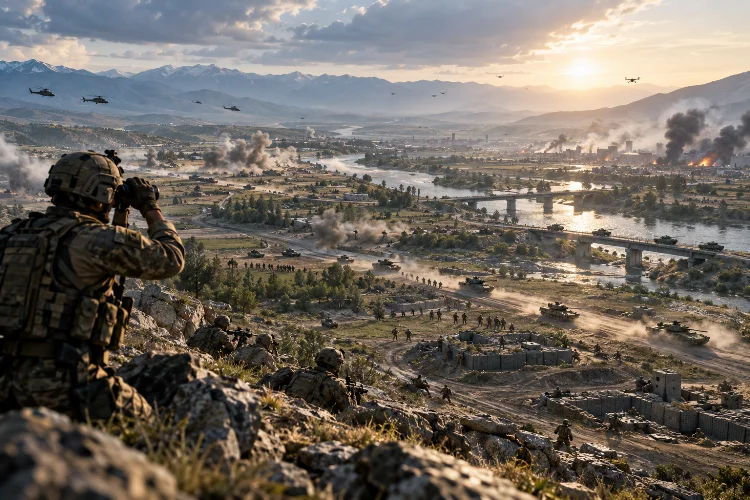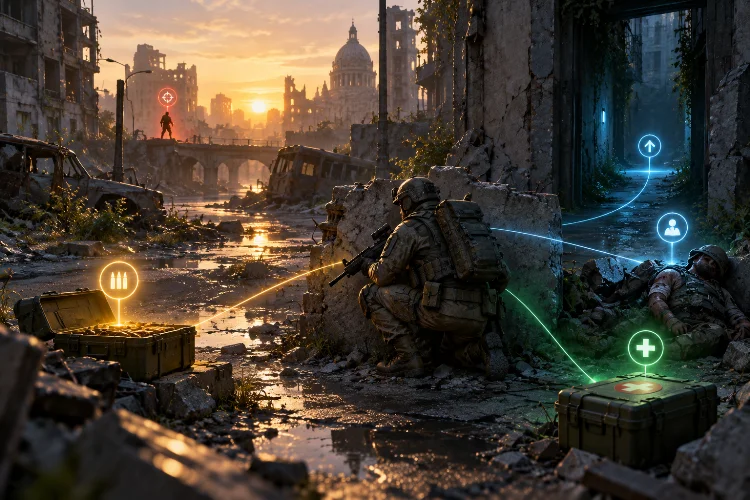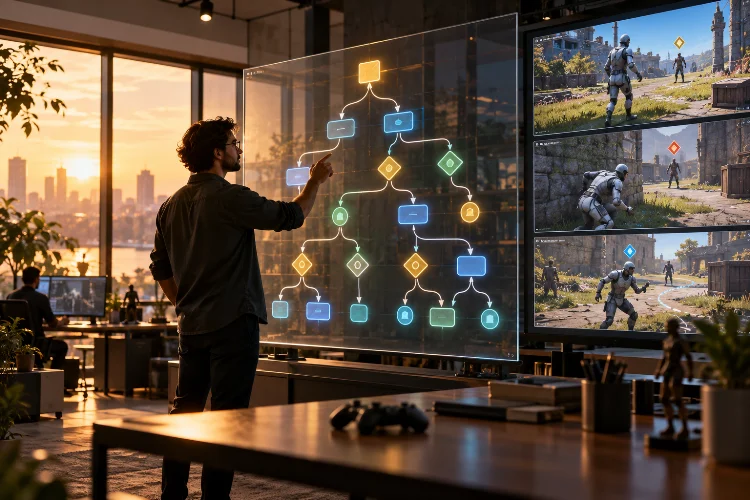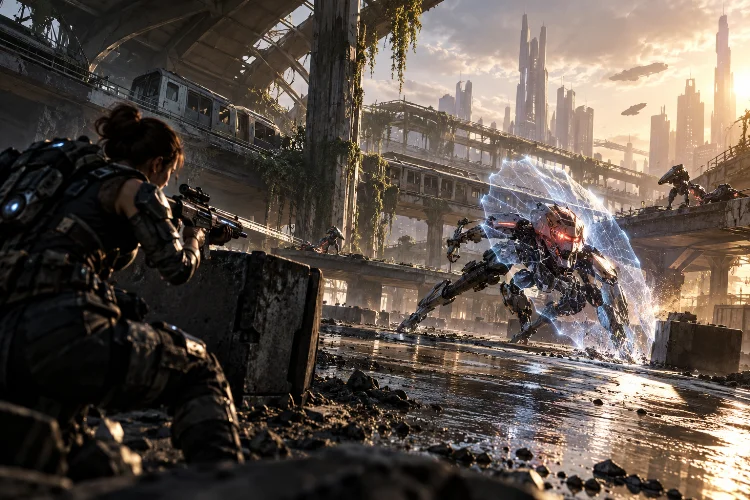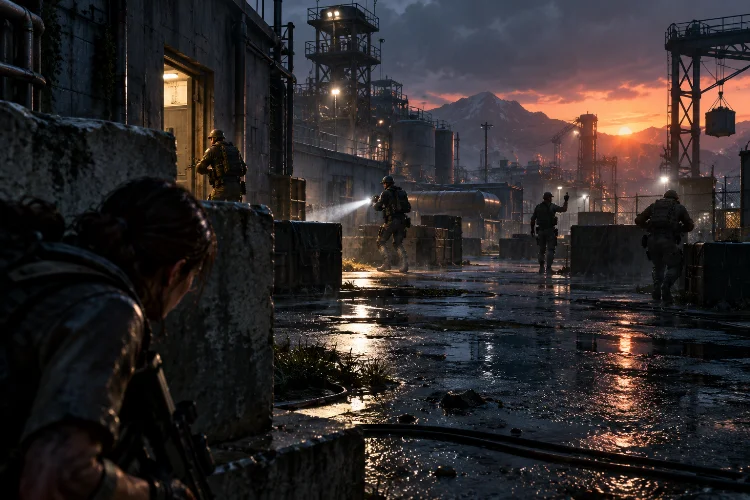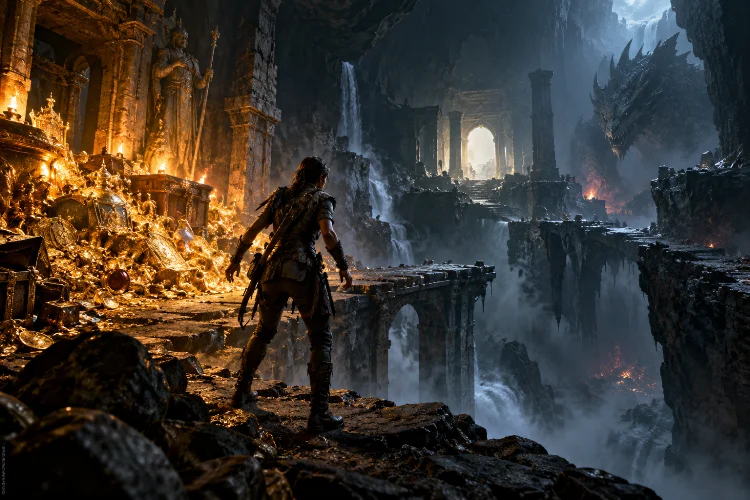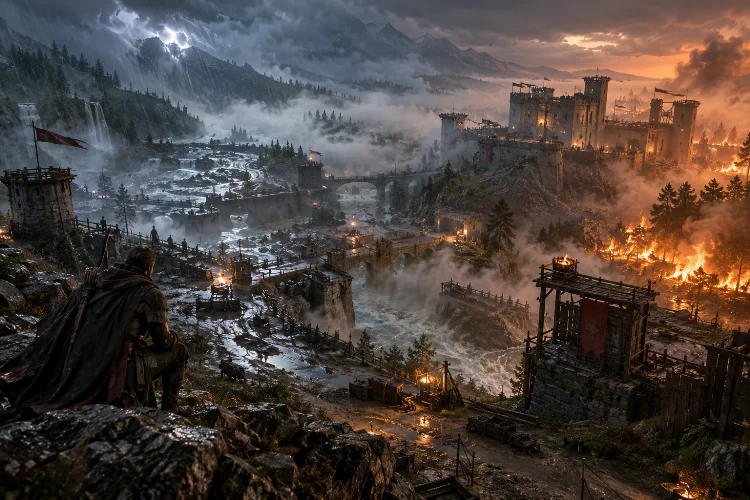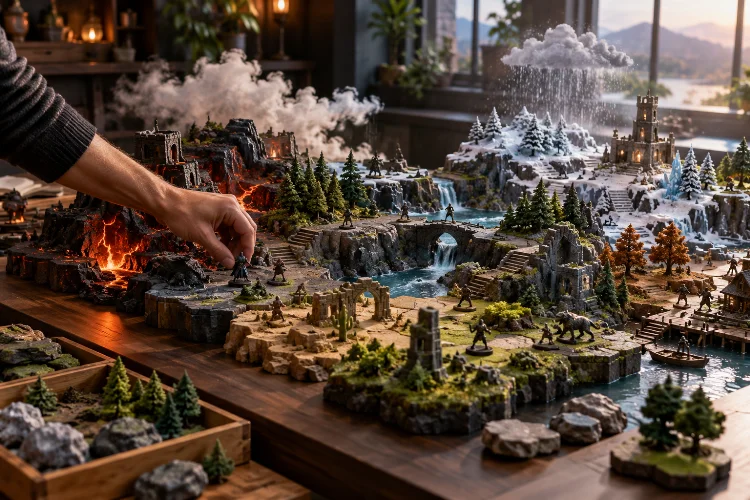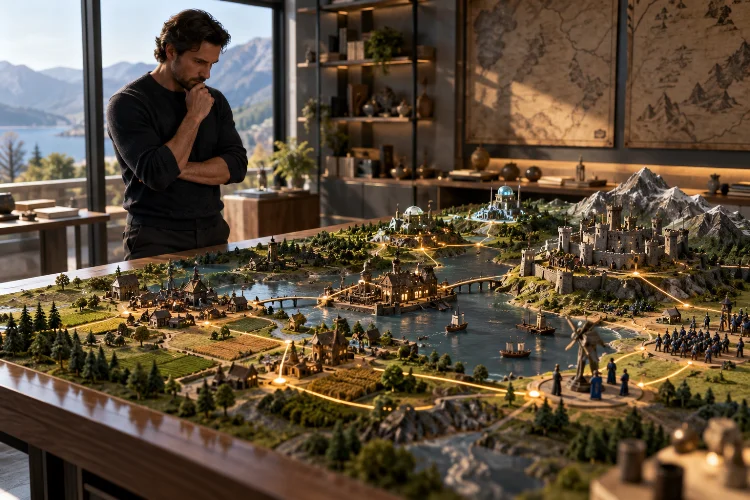
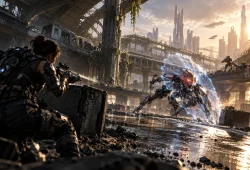
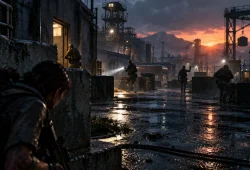
A game becomes much more interesting when its rules do more than sit quietly in the background. Imagine entering the same combat area twice. During the first visit, heavy rain reduces visibility and makes fire…
Why Systemic Game Design Creates More Replayable Player Experiences
The most replayable games are not always the ones with the most levels, missions, or collectibles. Sometimes players return to the same map repeatedly because the systems inside it keep creating different situations. A guard…
Designing Interconnected Mechanics for Deep Strategic Gameplay
A game does not become strategically deep simply because it contains dozens of mechanics. You can give players crafting, combat, trading, diplomacy, research, stealth, and character upgrades, but if those systems barely affect one another,…
How Complex Gameplay Systems Create Emergent Player Strategies
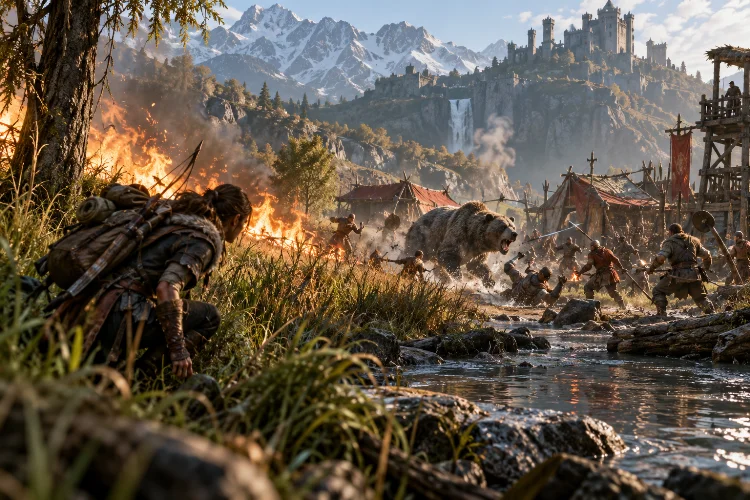
Some of the most memorable moments in games are situations the developers never explicitly scripted. A player might lure a predator into an enemy camp, set nearby vegetation on fire, use the chaos to sneak…
Designing Scalable Game Systems Across Multiple Hardware Platforms
Building a game for one fixed machine is difficult enough. Supporting everything from high-end gaming PCs to consoles, handheld devices, and mobile hardware makes the engineering challenge dramatically more complicated. Different devices may have powerful…
How Modern Engines Stream Complex Assets Without Loading Screens
Modern games can move players from a dense city into a forest, cave, interior, or completely different biome without stopping for an obvious loading screen. That seamless transition looks simple from the player’s perspective. Behind…
Why Game Engine Architecture Matters for Large Open Worlds
A huge open world is easy to imagine but incredibly difficult to run. Players may drive across cities, climb distant mountains, enter buildings, trigger missions, interact with wildlife, and travel for kilometers without seeing a…
Understanding Rendering Pipelines Inside Advanced Gaming Engines
When you look at a modern game, the final image can seem almost effortless. Characters move under dynamic lights, reflections change across wet surfaces, shadows stretch across buildings, particles fill the air, and everything updates…
How Modern Game Engines Handle Massive Real-Time Virtual Worlds
Open-world games can make it feel as though an entire continent is sitting inside your computer. Mountains stretch toward the horizon, cities contain thousands of objects, forests are packed with vegetation, and characters continue moving…
How Modern VR Systems Process Complex Real-Time User Movement
Wave your hand, lean around a virtual object, crouch behind cover, and turn your head – all within a few seconds. A modern VR headset has to understand every one of those movements quickly enough…